
Book Summary
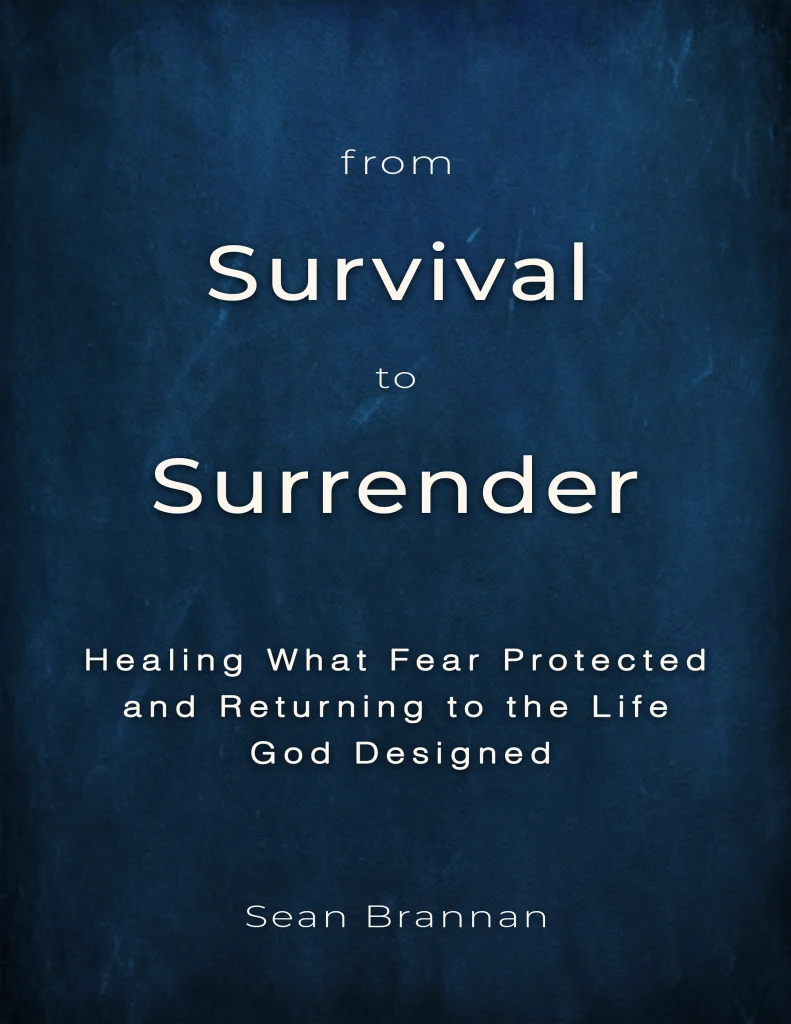
From Survival to Surrender is a faith-based healing book about the way fear, pain, trauma, shame, and self-protection can quietly shape how we live, love, trust, and relate to God.
The book begins with a simple truth: survival was never God’s design for the human heart. We were created for connection with God, honest relationship with others, and the freedom to live from identity instead of fear.
Survival mode often begins beneath the surface. A wound creates fear, fear reaches for protection, and over time that protection hardens into a pattern that can start to feel like personality. What began as a way to stay safe can become the very thing that keeps us guarded, anxious, controlling, emotionally shut down, disconnected, or unable to fully trust love.
This book helps readers recognize the battlefield of the heart. It explores how fear becomes a framework for life, how self-protection can disguise itself as wisdom, and how emotions like anger, anxiety, numbness, and shame can become armor. These responses are not treated as simple character flaws. Many began as survival strategies. They may have helped us endure rejection, neglect, betrayal, instability, emotional overwhelm, or pain, but they were never meant to become our permanent way of living.
A major theme of the book is that what we call “personality” may sometimes be adaptation. Some of us became the strong one, the fixer, the achiever, the peacekeeper, the invisible one, or the one who always holds everything together. Those roles may be praised by others, but they can also hide deeper fear, unmet needs, and false beliefs. The book invites the reader to ask: What did I become in order to survive, and is God inviting me to live from something truer?
The middle of the book looks closely at relationships, attachment, shame, and surrender. It explains why connection can feel unsafe even when we deeply want to be loved. We may crave closeness and resist it at the same time because the past taught us that vulnerability could lead to rejection, abandonment, control, or pain.
The book also explores the shame loop: seeing a pattern, trying harder, falling short, condemning ourselves, and then trying again from pressure instead of grace. It draws a careful line between condemnation and conviction, because the two are often confused but do very different things in us. Condemnation attacks who we are and pushes us into hiding, while conviction names what’s actually true and leaves the door open to come back and be restored.
Surrender is presented as something different from weakness, passivity, or giving up. It’s trusting God with the places we’ve been trying to control ourselves. The book is honest about the fact that surrender can feel unsafe, especially when control once helped us survive. Letting go can feel like exposure. Trust can feel risky. Even obedience can become another form of control when it’s driven by fear instead of love.
Again and again, the book points readers back to the character of God. He is patient, steady, near to the brokenhearted, and safe enough to receive what is still raw.
Another central message is that healing happens in layers. Healing does not mean we never struggle again. Old patterns may resurface, but that does not always mean failure. Sometimes it means another layer is ready to be healed. Growth often looks like recognizing a pattern sooner, returning to God faster, repairing more honestly, and responding from truth instead of instinct.
The later chapters move from healing toward the life God designed. That freedom isn’t about reaching perfection. It’s about learning to live from identity rather than approval, and from grace rather than the shame that’s been running the show. The goal isn’t becoming someone else; it’s returning to who God created us to be, underneath the fear, the armor, the roles, and the false labels we’ve been carrying.
From Survival to Surrender isn’t interested in blaming the past or fixing ourselves through sheer willpower. It’s about seeing clearly what fear built, surrendering what survival was trying to protect, receiving the grace of God, and learning to actually live in the freedom Christ already made possible.
Survival may explain where we have been, but surrender is the way back to the life we were designed to live.
Table of Contents
Survival was Never the Design
How To Use This Book
Chapter 1: The Quiet War Within
Chapter 2: The Lie of Self- Protection
Chapter 3: When Emotions Turn into Armor
Chapter 4: The Patterns That Form In Pain
Chapter 5: When Connection Feels Unsafe
Chapter 6: Why We Stay Stuck
Chapter 7: When Surrender Feels Unsafe
Chapter 8: Healing In Layers
Chapter 9: The Life You Were Designed For
Chapter 10: Learning to Live in Rhythm
Chapter 11: When the Storm Returns
Chapter 12: When Grace Leads
Appendix A: The Healing Map
Appendix B: Glossary of Key Terms
Appendix C: Bible References
A Word From the Author
Book Sample: How To Use This Book
How To Use This Book
This book is meant to be walked through, not rushed. Some chapters may feel like they are naming your story in real time. Others may simply plant a seed that makes more sense later. That is normal. Healing rarely moves in a straight line, and revelation often comes in layers.
The purpose of this book is not to turn you into your own therapist or hand you another self-improvement project. This is a journey of revelation. It is meant to help you see clearly: where fear has been operating, where survival patterns have taken root, where shame has distorted identity, and where God is inviting you into surrender.
The deeper application work belongs in the companion journal, related tools, and ongoing resources. This book opens the door. It gives language. It names patterns. It points to Jesus. It helps you begin the journey with clarity.
Go at your own pace
If a chapter stirs something up, slow down. You do not need to push through simply because you can. Pause. Breathe. Pray. Ask the Holy Spirit what He is revealing. Some parts of this book may feel confirming. Others may feel uncomfortable. Discomfort does not always mean something is wrong. Sometimes it means something hidden is coming into the light.
Pay attention to what stands out
A sentence, biblical passage, story, or question may stay with you after you finish reading. Pay attention to that. Often, what lingers is where God is inviting deeper honesty. You may want to underline it, write it down, pray through it, or return to it later in the companion journal.
Do not do this alone if it gets heavy
This book speaks into wounds, fear, shame, survival patterns, emotional protection, and relational pain. If old trauma, intense grief, or overwhelming emotion begins to surface, reach out to a trusted counselor, pastor, mentor, or qualified professional. There is no shame in needing support. Healing was never meant to happen in isolation.
This book is spiritually grounded and clinically informed, but it is not a substitute for professional counseling, diagnosis, trauma treatment, medical care, safety planning, or crisis support. Surrender does not mean staying in harm, minimizing abuse, or ignoring danger. Let this book serve as a guide, not a replacement for the help you may need.
What you will find in each chapter
Each chapter is built around a biblical passage, story, reflection, and careful insight from established psychological frameworks such as attachment theory, family systems theory, trauma-informed care, shame research, nervous system regulation, and identity formation. These frameworks are not treated as the final authority. They are tools that help explain how fear and pain often shape human behavior. Scripture remains the written witness that keeps bringing us back to Christ. Jesus remains the center.
You will also find short reflections and a few journal prompts at the end of most chapters. These are not meant to turn the book into a workbook. They are simple invitations to pause, notice what surfaced, and begin bringing it honestly before God. For deeper processing, use the companion journal for each chapter.
Walking with the companion journal
Alongside this book, there is a companion journal designed to help you move from insight to integration. It follows the chapters and themes of the book and gives you space to capture what stood out, process the reflection prompts more deeply, notice patterns, pray honestly, and begin building simple practices that support healing.
You can use any notebook if you prefer. The companion journal simply gives you a structured place to slow down and respond. When something hits your heart, do not rush past it. Pause and write. Let it become a conversation between you and God, not just notes on a page.
You do not have to move through this perfectly. You do not have to respond perfectly. Just keep showing up honestly.
God is far more patient with your process than you are.